
Elige una opción
Continuar como invitado
Los usuarios invitados solo tienen acceso a 3 test gratis y no podrán acceder a las explicaciones de las respuestas fallidas
Como usuario registrado
Los usuarios Registrados tienen acceso a 3 Test gratuitos y podrán ver explicaciones a las respuestas fallidas
Sólo los usuarios registrados pueden ver las explicaciones de las preguntas falladas. Registrarse es gratis.
Examen Diagnóstico para Nuevos Alumnos 3
Si es tu primer examen, prueba las preguntas más sencillas de la DGAC. ¡Toma confianza!
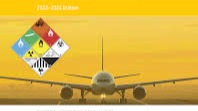
Document titled “Technical Instructions for the Safe Transport of Dangerous Goods by Air” and its supplement, corresponds to:
📌 Hint: It’s an ICAO Document (Doc) number, not a national DAR.
✅ OACI (ICAO) 9284-AN/905.
“Technical Instructions for the Safe Transport of Dangerous Goods by Air” is ICAO Doc 9284, including its Supplement.
Las explicaciones son para usuarios registrados.
La línea de referencia desde la cual se toman todas las mediciones de Brazo, es establecida por el fabricante y se denomina:

📌 Pista: Es el “punto cero” del avión para medir distancias hacia adelante o atrás.
✅ Datum.
El Datum es la línea/plano de referencia fijado por el fabricante desde donde se miden todos los brazos (distancias) para calcular momentos y ubicar el centro de gravedad. Sin datum, no hay “cero” común para medir.
Las explicaciones son para usuarios registrados.
The Maximum Weight approved on the ramp minus weight of fuel burnt during engine start and ground operations before take off equals:

📌 Hint: “Ramp → taxi fuel burn → takeoff.”
✅ Maximum Take off Weight.
Maximum Ramp Weight (MRW) minus the fuel burned during engine start and taxi equals the Maximum Takeoff Weight (MTOW), since that fuel is consumed before the takeoff roll begins.
Las explicaciones son para usuarios registrados.
Los Exámenes Gratuitos muestran el 20% de las preguntas del examen oficial. Los usuarios con Cuenta Premium podrán acceder al listado completo de preguntas.
El reglamento DAR-18 se refiere a:

📌 Pista: Asócialo a “Dangerous Goods” y a reglas para transportar sustancias/objetos peligrosos.
✅ Reglamento sin riesgo de mercancías peligrosas por vía aérea.
El DAR-18 regula el transporte seguro de mercancías peligrosas por vía aérea, alineado con las Instrucciones Técnicas (OACI 9284) y exigencias operacionales para evitar riesgos.
Las explicaciones son para usuarios registrados.
Las señales para maniobras en tierra que debe efectuar un señalero se encuentran publicadas en:

📌 Pista: Busca el documento que reúne reglas operacionales generales y anexos de señales en tierra.
✅ DAN-91.
Las señales para maniobras en tierra (marshalling) están incluidas en DAN-91, dentro del apartado de señales aplicables a operaciones en superficie.
Las explicaciones son para usuarios registrados.
Los Exámenes Gratuitos muestran el 20% de las preguntas del examen oficial. Los usuarios con Cuenta Premium podrán acceder al listado completo de preguntas.
By which of the following methods it is possible to determine the Center of Gravity (C.G.) of an airplane?

📌 Hint: CG is an arm, so it comes from moment ÷ weight.
✅ Dividing the total moment by the total weight.
The CG arm is found using  . The other options invert or misuse the variables.
Las explicaciones son para usuarios registrados.
Incluye todo el equipo operativo que tiene posición fija y está actualmente instalado en el avión; consiste de la estructura, equipos instalados, fluidos en las líneas y combustible no utilizable:

📌 Pista: “Avión solo”, con lo fijo y lo que no se puede drenar.
✅ Peso vacío.
La descripción corresponde al peso vacío: estructura, equipos fijos instalados, fluidos en líneas y combustible no utilizable. No incluye carga útil ni combustible utilizable.
Las explicaciones son para usuarios registrados.
Los Exámenes Gratuitos muestran el 20% de las preguntas del examen oficial. Los usuarios con Cuenta Premium podrán acceder al listado completo de preguntas.
An aircraft empty basic weight includes:
📌 Hint: “Empty basic” still counts fluids and unusable fuel that can’t be removed.
✅ The above plus hydraulic liquid, oil and undrainable fuel (residual).
Empty basic weight includes the airframe, engines, and permanently installed equipment, plus operating fluids and undrainable (residual/unusable) fuel that remain in the system.
Las explicaciones son para usuarios registrados.
Fuel consumption in flight, including, sweptback wing airplanes, does not affect the CG position.

📌 Hint: If the fuel is not exactly at the CG, burning it shifts the balance point.
✅ False.
Burning fuel can change the CG, because fuel is stored at specific stations and its weight decreases during flight. Depending on tank location (wing, center, fuselage), CG may move forward or aft. Sweptback wings don’t eliminate this effect.
Las explicaciones son para usuarios registrados.
Los Exámenes Gratuitos muestran el 20% de las preguntas del examen oficial. Los usuarios con Cuenta Premium podrán acceder al listado completo de preguntas.
Some of the problems caused by overloading an airplane are: a) A longer landing run because landing speed is lower. b) A longer landing run because landing speed is higher. c) The airplane will need a higher takeoff speed, which will result in a longer takeoff run. d) The airplane will need a higher takeoff speed, which will result in a shorter takeoff run.
📌 Hint: More weight → higher stall speed → higher takeoff/landing speeds → longer distances.
✅ B and C are correct.
Overloading increases stall speed, so you need a higher takeoff speed, which usually means a longer takeoff run (c). It also increases landing speed, so the landing roll becomes longer (b).
Las explicaciones son para usuarios registrados.
Aciertos
Fallos
Nota